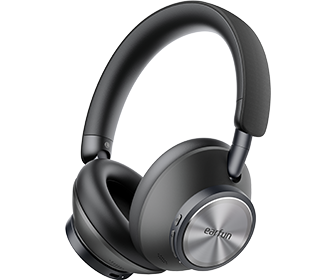
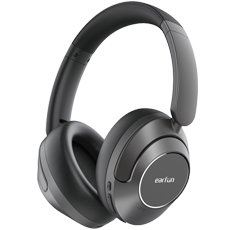
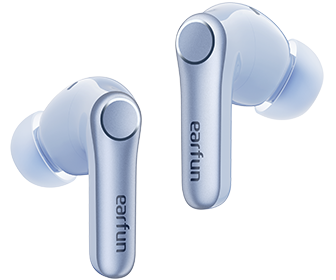
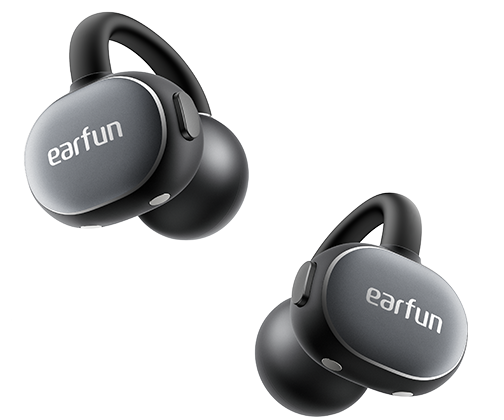
R&D Deep Dive Acoustic Architecture: Why Over-Ear Systems Outperform In-Ear Alternatives
An engineering analysis of driver physics, spatial soundstages, passive noise attenuation, and thermal comfort in over-ear wireless audio design.
1. Dynamic Chamber Physics & Dual-Coaxial Driver Alignment
The acoustic advantage of over-ear wireless headphones stems from chamber volume. In-ear monitors are severely constrained by ear canal anatomy, limiting driver diameters to 6mm–12mm. In contrast, over-ear cups comfortably house 40mm to 50mm dynamic drivers coated with high-rigidity materials such as Diamond-Like Carbon (DLC) or Titanium Composite.
EarFun's proprietary DCAA™ (Dual-Coaxial Acoustic Architecture) takes this further by positioning a high-frequency tweeter directly coaxially aligned with a deep-bass dynamic woofer. This coaxial alignment ensures that soundwaves of varying wavelengths arrive at the ear canal with zero phase distortion, creating an expansive spatial soundstage impossible to replicate in miniaturized earbud housings.
2. Hybrid Active Noise Cancellation (ANC) vs. Passive Acoustic Isolation
Achieving true silence in high-noise environments—such as aircraft cabins or bustling call centers—requires a multi-tiered noise control strategy. Over-ear headphones provide immediate passive attenuation of 15dB to 25dB in higher frequencies (2kHz–8kHz) simply through high-density memory foam ear cushions and sealed back cavity design.
Working in harmony with passive sealing, EarFun’s Qualcomm®-powered Hybrid Active Noise Cancellation employs external Feedforward microphones to sample ambient noise before it reaches the ear, combined with internal Feedback microphones to measure residual sound inside the cup. Digital Signal Processors calculate inverse phase anti-noise signals in milliseconds, attenuating low-frequency rumble by up to 45dB–50dB across a wide frequency spectrum.
3. Voice Pick-up Optimization with Multi-Microphone Beamforming & AI ENC
Enterprise buyers frequently deploy over-ear wireless headphones for remote business calls and virtual collaboration. EarFun integrates multi-microphone array configurations with neural-network Environmental Noise Cancellation (ENC). By isolating the wearer's voice vector while suppressing background office chatter and wind turbulence, clear vocal articulation is guaranteed across Microsoft Teams, Zoom, and mobile cellular calls.