Top Featured Audio Hardware & RGB Peripherals
Explore our certified OEM/ODM manufacturing portfolio optimized for gaming distributors, retailers, and brand partners.
Executive Industry Whitepaper: RGB Gaming Headset Market
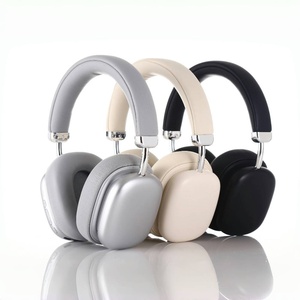
The global gaming audio market has transitioned from basic acoustic reproduction into a multi-layered ecosystem defined by ultra-low latency wireless protocols, AI-driven Environmental Noise Cancellation (ENC), dynamic software-synced RGB lighting, and high-fidelity spatial audio processing. For B2B procurement managers, brand operators, and consumer electronics distributors, securing a top trusted RGB gaming headphones manufacturer is no longer merely about sourcing plastic shells—it requires partnering with advanced acoustic R&D facilities capable of end-to-end hardware-software integration.
Modern esports players and competitive gamers demand sub-20ms wireless audio transmission alongside immersive 7.1 surround sound positioning. Simultaneously, market research indicates that lighting aesthetics remain a primary purchase driver for over 68% of gaming peripheral consumers worldwide. To maintain a competitive margin, OEMs must deploy efficient power-management microcontrollers (MCUs) that drive multi-zone addressable RGB LEDs without compromising battery endurance.
Acoustic Engineering & Hardware Performance Architecture
Building high-performance RGB gaming headsets requires an intricate balance between driver dynamics, power consumption, mechanical ergonomics, and wireless bandwidth. As a recognized audio brand engineered in California since 2018—with multiple Red Dot Design Awards, CES Innovation Awards, and iF Design Award honors—our manufacturing baseline adheres to rigorous acoustic engineering protocols.
1. Dynamic Driver & Acoustic Chamber Calibration
Our acoustic R&D team utilizes dual-coaxial DCAA™ architecture combined with 53mm Neodymium high-density dynamic drivers. By utilizing PET/Titanium composite diaphragms, our gaming headsets deliver ultra-wide frequency responses (20Hz–40kHz), ensuring deep sub-bass response during explosions alongside crisp, clear high frequencies for enemy footstep detection.
2. Power-Optimized Addressable RGB Engine
Conventional RGB headsets drain battery reserves rapidly. Our proprietary power IC design incorporates dynamic pulse-width modulation (PWM) dimming algorithms. This reduces RGB LED power consumption by up to 35% while granting users full customization across 16.8 million colors, including breathing, static, spectrum cycling, and game-event sync modes.
| Performance Metrics | Entry-Level OEM Standard | Mid-Tier Retail Specification | Flagship E-Sports Grade (Our R&D Baseline) |
|---|---|---|---|
| Wireless Protocol | Bluetooth 5.0 (60-80ms Latency) | Bluetooth 5.3 + 2.4GHz Dongle (30-40ms) | Dual-Mode 2.4GHz LE Audio & Bluetooth 5.4 (<15ms Latency) |
| Acoustic Transducer | 40mm Dynamic Driver (Mylar) | 50mm Neodymium Driver | 53mm Dual-Coaxial DCAA™ Titanium Diaphragm Drivers |
| RGB Illumination | Single-zone Static Lighting | Multi-zone RGB Cycles | Addressable Multi-Zone Software-Synced RGB Engine |
| Noise Cancellation | Passive Isolation Only | Single Mic Software ENC | Dual-Mic AI Deep Learning ENC + QuietSmart™ 3.0 Hybrid ANC |
| Battery Life (RGB On/Off) | 12 hrs / 20 hrs | 25 hrs / 45 hrs | 50 hrs (RGB On) / 80+ hrs (RGB Off) Fast Charge |
2025–2028 B2B Sourcing & Procurement Trends in Gaming Audio
As global supply chains adjust to evolving consumer preferences and technological breakthroughs, procurement directors must anticipate core hardware trends to maintain inventory relevance and maximize margin retention.
1. Auracast™ Broadcast & LC3 Codec Adoption
The gaming industry is aggressively transitioning from classic Bluetooth to Bluetooth LE Audio and LC3 codec standard. Future-proof headsets must support multi-stream audio and Auracast broadcast capability, enabling low-power, zero-lag tournament broadcasts.
2. Ultra-Lightweight Ergonomics (<240g)
Long gaming sessions require ergonomic structural adjustments. Procurement data shows a sharp shift toward memory foam ear cushions with cooling-gel inserts, self-adjusting suspension headbands, and ultra-lightweight composite chassis under 240 grams.
3. Cross-Platform Multi-Point Wireless
Consumers require seamless switching between PC, PS5, Xbox Series X, Nintendo Switch, and mobile devices. Modern OEM designs integrate simultaneous 2.4GHz wireless and Bluetooth 5.4 connections, allowing players to answer calls mid-game effortlessly.
Enterprise Advantage: Manufacturing Reliability & E-E-A-T Capabilities
Partnering with a reliable OEM/ODM manufacturer is critical to eliminating batch-to-batch inconsistencies, supply disruption, and high product return rates. Founded in California by a group of passionate industrial designers, acoustic engineers, and audiophiles, our enterprise infrastructure guarantees top-tier compliance and design innovation.
Full-Chain In-House R&D
From initial ID CAD modeling, acoustic simulation, dynamic board layout (SMT), to plastic injection molding and custom driver voicing, we maintain complete control over intellectual property and manufacturing quality.
Comprehensive Quality Control (QC)
Every gaming headset batch undergoes rigorous laboratory stress testing: 10,000+ headband flex cycles, drop tests from 1.5 meters, salt spray corrosion tests for USB-C contacts, and micro-acoustic frequency response calibration using Head & Torso Simulators (HATS).
Global Certification & Compliance
Our production facilities maintain ISO9001 and BSCI certifications. All finished products comply with CE, FCC, RoHS, REACH, Telec, and Anatel standards, ensuring smooth customs clearance for North American, European, and Asia-Pacific markets.
Frequently Asked Questions (FAQ) for Sourcing & Procurement
What is the Minimum Order Quantity (MOQ) for custom OEM RGB gaming headphones?
For standard custom logo printing and tailored gift box packaging, our typical starting MOQ is 1,000 units per model. For deep ODM projects involving custom plastic tooling, bespoke RGB light-pipe guides, or exclusive chipset firmware, the base MOQ is generally 3,000 units.
How do you guarantee ultra-low latency audio on wireless gaming headsets?
We deploy proprietary 2.4GHz RF wireless chipsets operating on optimized LE Audio stacks. Coupled with high-performance USB-A/Type-C dongles, our latency is strictly benchmarked under 15 milliseconds, eliminating audio-visual synchronization delay in competitive gameplay.
Can you supply PC software driver suites for RGB lighting and EQ customization?
Yes, we provide fully customizable Windows driver software packages for OEM buyers. This allows end-users to adjust parametric EQ profiles, enable virtual 7.1 spatial surround sound, modify microphone noise suppression, and synchronize RGB lighting patterns.
What warranty and after-sales support guarantees are provided to wholesale partners?
We back our audio hardware with an 18-month international warranty, a 30-day return support policy for sample validation, and dedicated RMA technical service teams available across US, EU, UK, DE, and JP distribution hubs.
What is the standard production lead time for mass manufacturing orders?
Standard OEM repeat orders are typically produced and shipped within 30 to 35 business days following final sample artwork sign-off. First-time customized ODM projects may require 45 to 60 days to accommodate tooling validation and pre-production sample testing.
Ready to Expand Your Gaming Audio Lineup?
Get in touch with our California-engineered acoustic manufacturing team today to request product samples, factory price quotes, and technical specs.
Send an Inquiry