Featured OTC Hearing Aid & Smart Audio Portfolio
Explore our customizable OEM/ODM product series built on high-performance digital signal processing (DSP), wide dynamic range compression (WDRC), hybrid ANC, and medical TWS architectures.
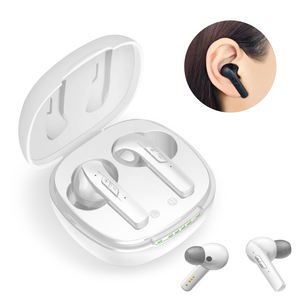
JINGHAO 16-Channel Rechargeable Digital OTC TWS Hearing Aid
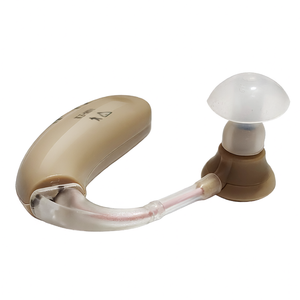
Senior-Friendly Ergonomic In-Ear Hearing Aid for Presbycusis
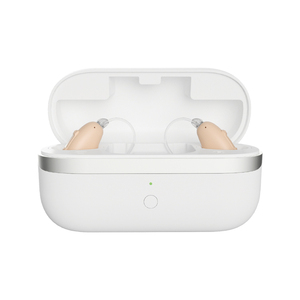
Smart App-Controlled Bluetooth Hearing Aid Earbuds
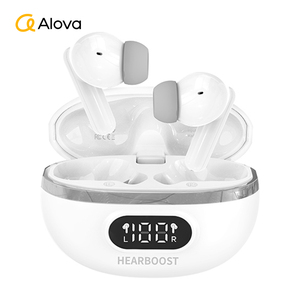
ALOVA Waterproof IPX5 Dual-Mode TWS Hearing Aid Earbuds
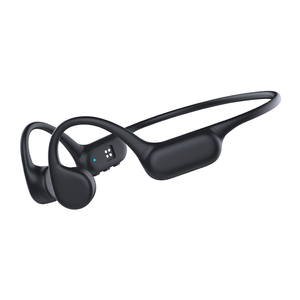
Open-Ear Bone Conduction Hearing Aid Headphones (32GB)
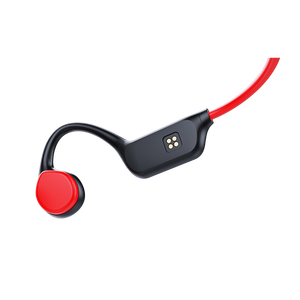
X7Pro Sports Bone Conduction Earbuds with Hearing Assist
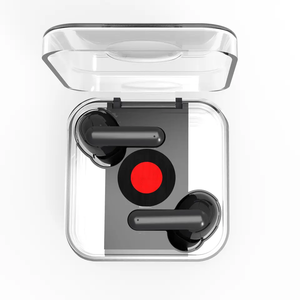
Transparent Cyber-Shell Gaming TWS with Hearing Enhancement
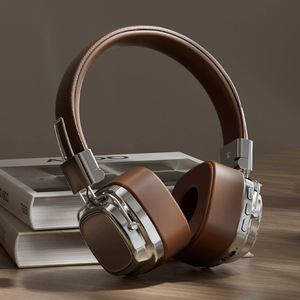
2026 Retro-Aviation Over-Ear Hybrid ANC Hearing Assist Headset
Why Leading Global Brands Choose Our OEM/ODM Factory
Combining cutting-edge acoustic research and development with scalable precision manufacturing to deliver medical-grade performance at consumer electronics price points.
In-House Acoustic R&D Architecture
Engineered with dynamic multi-channel Wide Dynamic Range Compression (WDRC), proprietary QuietSmart™ ANC algorithms, and DCAA™ dual-coaxial drivers for crystal-clear voice enhancement and sound accuracy.
ISO 13485 & FDA OTC Compliance
Our Class 100,000 cleanroom production facilities adhere strictly to medical device quality management systems, fully aligning with US FDA 21 CFR 800.30 OTC hearing aid regulations and EU MDR standards.
Full Turnkey OEM/ODM Customization
From industrial ID design, micro-injection molding, high-speed SMT assembly to bespoke smartphone self-fitting App integration, we offer complete white-label and private-label solutions.
Automated 100% Sound Chamber QC
Every single unit undergoes rigorous electroacoustic testing using Audio Precision APx555 analyzers and GRAS 45CA head and torso simulators to guarantee frequency response and total harmonic distortion (THD < 1%).
Rapid Prototyping & NPI Execution
Accelerated New Product Introduction (NPI) workflow ensures 3D working samples within 48 hours, customized tooling in 20 days, and mass production delivery within 35 days.
Award-Winning Industrial Design
Our engineering team has received prestigious international honors including 3× Red Dot Design Awards and 2× CES Innovation Awards, merging aesthetic elegance with medical ergonomics.
Executive Whitepaper: Strategic Transformation in OTC Hearing Aid Earbuds Manufacturing
The global hearing health market is undergoing an unprecedented structural shift. Following the historic United States FDA Ruling establishing the OTC (Over-the-Counter) Hearing Aid category, the boundary between traditional medical hearing aids and premium consumer TWS (True Wireless Stereo) earbuds has permanently blurred. Global audio brands, medical device distributors, and retail chain buyers now face an extraordinary market opportunity: delivering high-performance, self-fitting, aesthetically pleasing hearing support devices directly to mild-to-moderate hearing loss consumers without requiring expensive audiologist consultations.
As a premier OEM/ODM Hearing Aid Earbuds Factory & Supplier, our enterprise operates at the exact nexus of medical acoustic engineering and mass-market consumer electronics manufacturing. This industry whitepaper outlines the key technological architectures, regulatory frameworks, procurement methodologies, and market trends shaping the future of hearing assist TWS devices for global procurement directors and product line managers.
Demographic Expansion
According to WHO data, over 1.5 billion people live with hearing impairment. The OTC model lowers market entry barriers, expanding target demographics from traditional seniors to tech-savvy adults experiencing early presbycusis and ambient sound fatigue.
Medical & Consumer Convergence
Modern consumers reject the social stigma attached to traditional beige hearing aids. They demand sleek, modern TWS earbud aesthetics packed with Bluetooth 6.0, spatial audio, hybrid ANC, and self-fitting mobile app interfaces.
Future Procurement Trends for Hearing Aid Earbuds (2026–2030 Roadmap)
Procuring hearing aid earbuds in the current international trade landscape requires strategic foresight far beyond basic FOB pricing. B2B buyers must navigate complex regulatory environments, component selection risk, and software ecosystem compatibility. Here are the core procurement trends defining enterprise supplier selection:
1. Turnkey Regulatory Compliance Frameworks
Global procurement teams are shifting away from pure consumer audio factories toward ISO 13485 certified medical manufacturers. Future-proof procurement requires suppliers to offer pre-tested modular platforms that facilitate swift US FDA 510(k) registrations, FDA OTC self-declarations, and European MDR (Medical Device Regulation) certifications. Partnering with a factory that maintains active device master files significantly reduces time-to-market from 18 months down to under 90 days.
2. Shift Toward Multi-Channel WDRC + AI Noise Reduction Platform Architectures
Legacy basic sound amplifiers are rapidly being phased out due to poor sound clarity and user ear fatigue. Procurement buyers now specify minimum requirements of 16-channel to 32-channel Wide Dynamic Range Compression (WDRC) equipped with real-time Deep Neural Network (DNN) environmental noise suppression. Buyers prioritize platforms capable of separating human voice frequencies (500 Hz – 4 kHz) from background noise dynamically across varied acoustic environments (restaurants, windy streets, family gatherings).
3. Modular Firmware & White-Label App Customization
Hardware alone no longer guarantees brand differentiation. Leading B2B buyers require complete OEM software suites, including iOS and Android self-fitting applications. Procurement contracts increasingly specify Bluetooth LE Audio / Auracast readiness, customizable multi-band equalizer curves, in-app pure tone audiometry testing, and OTA (Over-The-Air) firmware update infrastructure.
4. Sustainable & Biocompatible Material Standards
As wear times increase to 12–16 hours daily, skin compatibility becomes paramount. Procurement specs now mandate medical-grade, hypoallergenic liquid silicone eartips (ISO 10993 compliant), sweat-proof nano-coatings, and eco-friendly recycled ABS plastic housings to satisfy corporate environmental compliance standards.
Key Technology & Engineering Development Trends
To maintain a competitive edge, OEM/ODM buyers must understand the core engineering breakthroughs transitioning from R&D laboratories to high-volume assembly lines. Our factory continuously integrates these state-of-the-art acoustic innovations into our standard production lines:
Real-Time Adaptive Acoustic Feedback Cancellation
High acoustic gain in compact ITE (In-The-Ear) form factors traditionally leads to high-pitched feedback whistling. Modern DSP chips run sub-10ms phase-inversion algorithms that detect and eliminate acoustic feedback instantly without sacrificing high-frequency speech clarity.
Dual-Mode Hybrid ANC + OTC Hearing Assist Fusion
Integrating active noise cancellation (ANC) feed-forward and feedback microphones with hearing enhancement algorithms allows users to switch seamlessly from active noise isolation during commutes to active transparent hearing assist in meetings.
Bone Conduction & Open-Ear Acoustic Transducers
For users with conductive hearing loss or chronic ear canal sensitivity, open-ear bone conduction transducers present a rapidly growing market segment. Delivering audio vibrations directly through the temporal bone bypasses ear canal blockages while preserving full environmental awareness.
Low-Power Bluetooth 6.0 & BLE Auracast Broadcasting
BLE Audio and Auracast enable OTC hearing earbuds to receive direct public audio broadcasts (e.g., airport announcements, theater audio, TV transmitters) with ultra-low latency (<20ms) and minimal battery drain.
Industrial OEM/ODM Procurement Technical Matrix
When selecting the ideal product architecture for your target market segment, refer to our factory's standardized technical reference table below:
| Product Architecture | Target User Segment | DSP / Acoustic Spec | Battery Life | Regulatory Target |
|---|---|---|---|---|
| 16/32-Channel Medical OTC TWS | Mild to Moderate Hearing Loss / Presbycusis | 16-32 Ch WDRC, <1% THD, 115dB OSPL90, Adaptive Feedback Cancellation | 10h Earbuds / 40h Case | US FDA OTC, CE MDR Class IIa |
| Senior-Friendly Ergonomic ITE | Seniors seeking simplicity, high gain support | 8-16 Ch DSP, Physical Knob/Dial Control, Large Battery Cells, Voice Prompt | 16h Earbuds / 60h Case | FDA OTC, ISO 13485, RoHS |
| Open-Ear Bone Conduction Sports | Active Users / Conductive Hearing Loss | Dual Bone Transducer, IPX8 Waterproof, 32GB MP3 Local Storage, BT 6.0 | 8h Continuous Play | CE, FCC, IPX8 Test Pass |
| Dual-Mode Gaming & Assist TWS | Gen-Z / Ambient sound amplification & Gaming | 38ms Low Latency, Cyber Transparent Shell, Hybrid ANC (-45dB) + Pass-through | 7h Earbuds / 30h Case | CE, FCC, REACH, BQB |
Manufacturing Operational Depth & Quality Control Systems
Operational excellence is the cornerstone of reliable OEM/ODM partnerships. Our manufacturing facility spans over 25,000 square meters, housing automated SMT lines, precision plastic injection tooling workshops, and dedicated cleanroom assembly bays.
Acoustic Calibration & Testing Methodology
Quality assurance is embedded in every stage of our manufacturing process. We reject sample-based testing in favor of 100% automated line testing for all finished hearing aid earbuds:
- GRAS 45CA Head & Torso Simulator Testing: Validates real-ear acoustic insertion gain, OSPL90 (Output Sound Pressure Level), and frequency response curve matching across 200 Hz to 8 kHz.
- Audio Precision APx555 Analyzer: Measures Total Harmonic Distortion (THD), Equivalent Input Noise (EIN < 25 dB SPL), and signal-to-noise ratios under simulated environmental noise conditions.
- Environmental Stress Screening (ESS): Units undergo thermal shock (-40°C to +70°C), salt spray corrosion testing, and 1.5-meter drop tests to guarantee long-term field reliability.
Factory Audit & Sample Evaluation Support
We welcome third-party factory audits (SGS, TÜV Rheinland, Intertek) and offer pre-certified evaluation engineering samples to qualified B2B buyers, brand owners, and medical device distributors worldwide.
Request Audit Package & Working SamplesFrequently Asked Questions (OEM/ODM Procurement FAQ)
Clear answers to key commercial, technical, and regulatory questions for global buyers evaluating OEM/ODM manufacturing partnerships.
What are the Minimum Order Quantities (MOQ) for custom OEM and ODM orders? +
For standard private-label OEM orders (custom logo laser engraving, customized packaging, color variants), our baseline MOQ starts at 1,000 units per model. For deep ODM customization (custom industrial design ID, new plastic mold tooling, tailored PCB circuit layouts, and proprietary mobile App development), the typical MOQ is 3,000 to 5,000 units depending on component complexity.
Are your hearing aid earbuds compliant with US FDA OTC regulations? +
Yes. Our OTC hearing aid platforms strictly adhere to US FDA 21 CFR 800.30 requirements for OTC hearing aids. This includes compliance with maximum output limits (OSPL90 < 111 dB SPL), frequency response bandwidth control, insertion loss parameters, user control accessibility, and mandatory FDA medical device label packaging warnings. We assist our clients with FDA 510(k) exemptions and registration filings.
Can you supply white-label iOS and Android apps for self-fitting pure tone audiometry? +
Absolutely. We offer fully functional, white-label smartphone applications capable of conducting in-app pure-tone air conduction audiometry tests across 500Hz, 1kHz, 2kHz, 4kHz, and 8kHz frequencies. The app automatically calculates the user's audiogram and programs the internal WDRC channel gain parameters inside the earbud DSP chip via Bluetooth LE in real-time.
What is the typical NPI timeline from design concept to mass production? +
Our standardized New Product Introduction (NPI) timeline runs as follows: 3D ID/MD mechanical drawings within 5 business days; SLA 3D printed functional prototypes within 48 hours; T1 plastic mold trial samples in 25–30 days; Pilot Production run (100 units) in 40 days; full ISO 13485 certified mass production delivery within 45–50 days from design approval.
How does your factory handle quality control and acoustic gain calibration? +
We mandate 100% electroacoustic testing for every manufactured unit using automated soundproof testing chambers equipped with GRAS 45CA head simulators and Audio Precision APx555 sound analyzers. We verify frequency response curve fitting, Total Harmonic Distortion (THD < 1%), battery voltage curves, and IPX water resistance before packaging.
What warranty, spare parts, and after-sales support policies do you offer? +
We provide a comprehensive 18-month commercial warranty on all OEM/ODM products. For international distributors and brand partners, we supply 1% to 2% spare finished units or mainboard assembly kits free of charge with mass production shipments to cover localized RMA service requirements smoothly.
Can we request customized battery capacities and safe charging cases? +
Yes. All lithium-ion button cell and pouch batteries integrated into our hearing earbuds carry full UN38.3, IEC 62133, and MSDS safety certifications. We offer charging case battery options ranging from 300mAh to 1000mAh, with optional Qi-certified wireless charging coils and USB-C fast-charging protection circuits.
How do I start an OEM project or request a formal quotation? +
To initiate a project, simply click our instant contact CTA button to connect directly with an OEM Account Director. You can also send your technical specifications, target MSRP, expected annual volumes, and regulatory destination to our sales engineering team for a detailed quotation within 24 hours.