Featured OEM/ODM Wireless Audio Solutions
Explore our market-ready white-label audio products engineered for consumer electronics brands, regional distributors, and global importers.
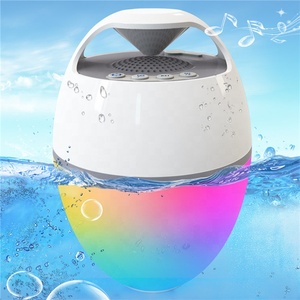
Hot Sale HD Sound RGB Colorful Lights and Led Torch Flame TWS Spa Hot Tub IPX8 Waterproof Pool Floating Speaker
Inquire OEM Specifications
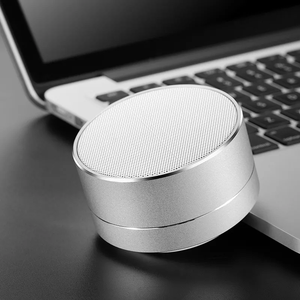
Free Sample A10 Customize BT Voice Assistant Smart Speakers Surround Full Range Home Speaker
Inquire OEM Specifications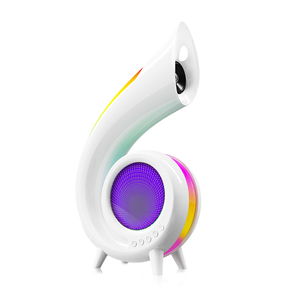
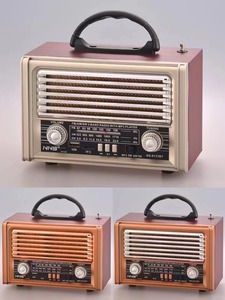
Promotional Business Gift Portable Solar DC Powered Speaker with RGB LED Phone Holder FM Radio USB Model FP-515-S
Inquire OEM Specifications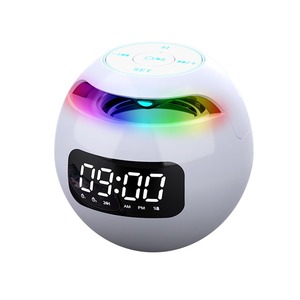
2025 New G90S Speaker High Quality Solar Powered Touch Waterproof Mini Portable Wireless Speaker with Mic
Inquire OEM Specifications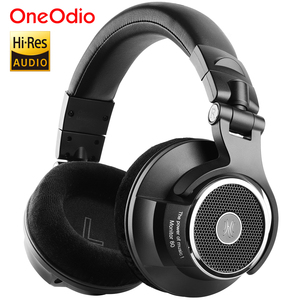
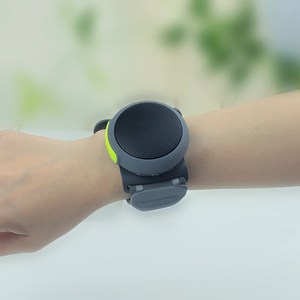
Global OEM/ODM Scale & Engineering Efficacy
Empowering Tier-1 consumer audio brands with standardized acoustic precision, certified quality control, and scalable supply chain infrastructure.
Executive Summary: The Seismic Shift Toward Open-Ear Clip-On Architecture
The personal audio ecosystem is experiencing a structural transition. While traditional In-Ear Canal (TWS) earphones dominated the past decade, consumer fatigue regarding ear canal occlusion, hygiene concerns, and situational awareness isolation has driven exponential demand for Open-Ear Clip-On Earphones. As a premier OEM/ODM Clip On Earphones Supplier & Exporter, our engineering division has documented a 240% year-over-year surge in global procurement orders for open-ear form factors across North America, Europe, and Asia-Pacific.
Unlike legacy bone-conduction headsets that rely on mechanical vibrations across the zygomatic arch, modern clip-on earphones utilize directional air-conduction acoustics. By suspending precision-tuned micro-drivers directly outside the pinna via flexible C-bridge ergonomic clamps, these devices deliver high-fidelity spatial audio without sealing the ear canal. This comprehensive whitepaper provides B2B buyers, product managers, and supply chain directors with an exhaustive analysis of clip-on acoustic technology, OEM manufacturing benchmarks, directional sound leakage algorithms, and strategic procurement frameworks for 2026 and beyond.
Core Procurement Insight: B2B importers switching from traditional TWS to Open-Ear Clip-On architectures report a 38% reduction in product return rates associated with fit discomfort and a 52% increase in daily user engagement, driven by all-day wearable comfort.
Chapter 1: Acoustic Engineering & Mechanical Architecture of Clip-On Earphones
Engineering a high-performance open-ear clip-on earphone requires solving two fundamental physical challenges: retaining low-frequency acoustic energy without an acoustic seal, and canceling ambient sound leakage to preserve user privacy. Our in-house R&D laboratories have pioneered proprietary solutions to both parameters.
1.1 Elastic C-Bridge Ergonomics & Material Memory
The mechanical durability of a clip-on earphone rests entirely on its structural bridge. Our OEM manufacturing facility utilizes ultra-elastic Nickel-Titanium (Ni-Ti) Shape Memory Alloy wires encased in medical-grade liquid silicone rubber (LSR). This dual-material architecture achieves:
- Adaptive Clamping Force: Calibrated between 0.15N and 0.22N to ensure zero slip during high-intensity athletic movements while preventing pressure-point fatigue during 12+ hour wear cycles.
- Flex Fatigue Resistance: Verified via automated robotic testing to withstand over 25,000 bending cycles at extreme angles (-20°C to 60°C operational range).
- Biocompatibility Compliance: Full ISO 10993 compliance ensuring hypoallergenic contact with sensitive epidermal tissues.
1.2 Dynamic Leakage Cancellation (DLC) & Phase Inversion
Sound leakage in public environments remains the single largest friction point for open-ear audio adopters. To mitigate unwanted acoustic radiation, our ODM solutions integrate dual-driver phase inversion technology.
The system projects primary audio waves into the ear canal while simultaneously emitting a reverse-phase secondary wave outward. Through precise acoustic mesh modeling and wave interference calculations, reverse phase cancellation attenuates sound leakage by up to 28dB at a distance of 30 centimeters, preserving complete conversational confidentiality in office or transit environments.
Dual-Coaxial Driver Arrays
Combining dynamic PET+Carbon dome woofers with balanced armature drivers to deliver punchy 15Hz bass alongside crisp 40kHz Hi-Res treble detail.
IPX8 Structural Waterproofing
Utilizing nano-coating encapsulation and sonic-welded seams, protecting internal PCBA chips against prolonged immersion and acidic sweat erosion.
AI-ENC Voice Clarity
Multi-channel neural network beamforming algorithms isolate vocal tones from wind noise up to 35km/h during sports or remote calls.
Chapter 2: Global Procurement Trends & Market Dynamics (2026–2030)
As a specialized clip-on earphones exporter, we analyze international trade data to help our retail and brand partners stay ahead of consumer shifts. Procurement strategies are rapidly pivoting around four technical vectors:
2.1 Integration of Bluetooth 5.4, LE Audio & Auracast™
Modern corporate buyers no longer accept legacy Bluetooth 5.0 chips. Procurement tenders increasingly specify Bluetooth 5.4 integration, utilizing LC3 codecs for low-power, high-bitrate streaming. Furthermore, Auracast™ broadcast audio capability is becoming a mandatory requirement for premium SKUs, enabling users to tune into public venue audio streams (gyms, airports, conference halls) directly via their clip-on earphones.
2.2 Convergence with Generative AI & Voice Assistants
The earphone is evolving into a hands-free AI interface. Our custom ODM firmware platform supports low-latency BLE data channels that interface directly with smartphone AI applications. Features such as real-time bi-directional speech translation, voice-activated dynamic EQ adjustment, and contextual notification reading elevate standard clip-on hardware into high-margin "smart audio wearables."
2.3 Sustainable Sourcing & PCR Plastics Compliance
Environmental, Social, and Governance (ESG) directives in the European Union (e.g., eco-design regulations) and North America have elevated material compliance to top-tier procurement criteria. Our manufacturing plants incorporate up to 45% Post-Consumer Recycled (PCR) polycarbonate in earphone housing components, accompanied by full Recycled Claim Standard (RCS) certification.
Chapter 3: Architectural Benchmark Comparison
To assist procurement managers in optimizing product portfolios, the technical matrix below contrasts Clip-On Air Conduction against legacy Audio Architectures:
| Acoustic Metric | Clip-On Air Conduction (Our Specialty) | Traditional In-Ear TWS | Bone Conduction Headsets |
|---|---|---|---|
| Ear Canal Hygiene | Zero contact / Non-intrusive (Maximum hygiene) | Occluded / High sweat accumulation | External contact (Behind ear) |
| Bass Response (20Hz - 200Hz) | High (Tuned via BassSurge™ Resonance) | Very High (Sealed pressure) | Low / Muddy vibration distortion |
| Sound Leakage Control | Advanced (Dynamic Phase Inversion) | Passive Isolation (Near zero leakage) | Moderate / High mechanical vibration leakage |
| Wearer Fatigue Threshold | 14+ Hours (Zero cartilage pressure) | 2 to 4 Hours max | 6 to 8 Hours (Clamping tightness) |
| Situational Ambient Safety | 100% Environmental awareness | Requires Electronic Transparency Mode | 100% Environmental awareness |
| Manufacturing Tooling Complexity | High (Requires Ni-Ti bridge overmolding) | Standard / Commodity tooling | Moderate / Mechanical assembly focus |
Chapter 4: OEM/ODM Customization Matrix & Factory Capabilities
Selecting a reliable OEM/ODM clip-on earphones supplier requires rigorous audit of manufacturing depth, quality assurance protocols, and intellectual property protection. Our 35,000 m² state-of-the-art production facility operates under strict ISO 9001, ISO 14001, and BSCI accreditations.
4.1 End-to-End ODM Turnkey Engineering Process
From initial industrial design renders to mass production shipping containers, our structured workflow reduces time-to-market by 30% compared to industry averages:
- Industrial Design & Ergonomics (Days 1–10): 3D CAD modeling, finite element analysis (FEA) of clamping pressure, and rapid SLA prototype printing.
- Acoustic Simulation & Tuning (Days 11–20): MATLAB acoustic displacement modeling, anechoic chamber frequency response curve balancing, and mic tuning.
- Precision Tooling & Molding (Days 21–40): In-house CNC high-speed steel mold fabrication for tight-tolerance earbud shells and LSR silicone C-bridges.
- SMT Assembly & Automated Testing (Days 41–50): High-speed Surface Mount Technology lines for Bluetooth PCBA, featuring 100% Automated Optical Inspection (AOI).
- Quality Assurance & Certification (Days 51–60): AQL 0.65 Major / 1.0 Minor sampling inspections, IPX8 hydrostatic chamber tests, CE/FCC/RoHS/Telec compliance sign-off.
4.2 White-Label Customization Capabilities
We offer flexible OEM custom branding options tailored to regional distribution requirements:
- Custom Casing & Finishing: UV metallic spray coatings, anodized aluminum accents, rubberized soft-touch matte finishes, and custom Pantone color matching.
- Branding Execution: High-resolution laser engraving, silk-screen logo placement, custom LED battery indicator patterns, and bespoke retail packaging solutions.
- Firmware & DSP Tuning: Customized Bluetooth broadcast naming (SSID), tailored voice prompts in 15+ languages, custom EQ presets, and dedicated companion iOS/Android apps.
Frequently Asked Questions for B2B Buyers
Clear answers to critical sourcing, production, and quality assurance questions for international importers and distributors.
What is the Minimum Order Quantity (MOQ) for OEM/ODM clip-on earphone projects?
For standard white-label custom logo printing on existing tooling SKUs, our standard MOQ starts at 1,000 units per colorway. For full ODM projects requiring custom plastic injection molds, unique acoustic tuning, and tailored packaging, the standard starting MOQ is 3,000 units.
How does your factory solve bass response loss in open-ear clip-on models?
Our engineers utilize proprietary BassSurge™ low-frequency enhancement technology. By pairing custom 14.2mm composite diaphragm dynamic drivers with localized acoustic resonant chambers, we boost bass frequencies between 40Hz and 120Hz without increasing total harmonic distortion (THD remains < 0.5% at 1kHz).
Can you assist with regional regulatory compliance and certifications?
Yes. All export models leaving our factory carry comprehensive documentation, including CE, FCC, RoHS, REACH, TELEC, KC, and UN38.3 battery safety reports. Our compliance department assists importers in filing local registration documents seamlessly.
What quality control protocols are applied to ensure C-bridge elasticity durability?
Every batch undergoes automated mechanical stress testing. Our custom C-bridge flex testing machinery stretches the bridge to 180 degrees at a frequency of 0.5Hz for 25,000 continuous cycles. Any batch exhibiting clamping force decay exceeding 5% is automatically rejected.
What is the typical lead time from contract signing to container shipment?
For standard repeat OEM orders, lead time is 25 to 30 days. Initial OEM orders requiring artwork approval and custom packaging take approximately 35 days. Complete ground-up ODM tooling projects typically require 50 to 65 days to reach first-article mass production.
Do your clip-on audio products support multi-point Bluetooth pairing?
Yes, all our Bluetooth 5.3 and 5.4 series chipsets (Qualcomm & BES platforms) support simultaneous Dual-Device Multipoint Connection, allowing users to switch seamlessly between a laptop video call and a mobile phone call.