0%

China’s Auracast Wireless Headphones market deserves careful comparison, not a quick “top manufacturers” list. Auracast is a Bluetooth broadcast-audio feature: one compatible transmitter can send audio to multiple compatible receivers. That may help in a shared listening space, but the headphones and audio source both need suitable support. A product page alone may not tell the whole story.

Bluetooth SIG CEO Mark Powell has highlighted Auracast’s potential to make shared audio more accessible. In practical terms, the promise is simple: one audio source can reach many listeners. That is a useful benchmark when assessing Chinese manufacturers. Look beyond sleek product photos. Check Auracast compatibility, Bluetooth specifications, microphone performance, battery life, comfort, warranty terms, and the availability of technical support. Ask suppliers for clear test documentation, too.

Details matter. A headset that feels comfortable for ten minutes may press painfully after an hour. A clean demonstration in a quiet showroom may not reflect performance near traffic or a busy factory. And “Auracast-ready” can mean different things across product listings, so request specific compatibility information before shortlisting a supplier. This guide examines Chinese manufacturers through those practical checks, rather than treating unverified rankings as fact. The market is moving quickly. Some claims may still need closer inspection.
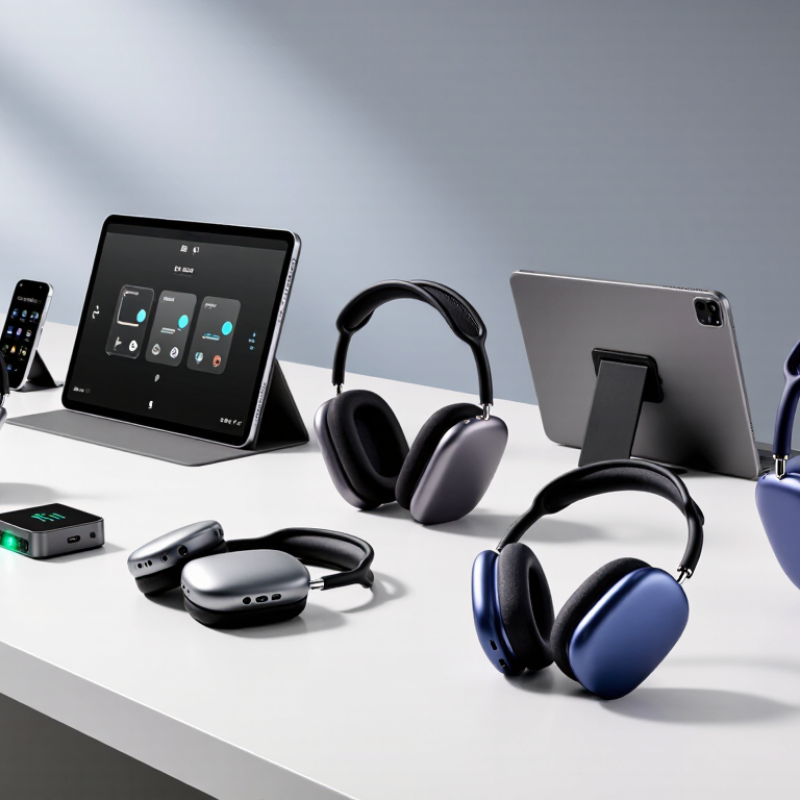
China Top Auracast Wireless Headphones Manufacturers?

Auracast Basics: LE Audio Broadcasts LC3-Coded Sound in the 2.4 GHz Band

Auracast is a broadcast feature built on Bluetooth LE Audio. It sends sound from one source to multiple compatible headphones or receivers. The audio uses the LC3 codec, which is designed to provide good sound at modest bitrates. Actual results still depend on codec settings, hardware, and listening conditions. Small details matter.

The broadcast travels in the 2.4 GHz band, shared with many everyday wireless devices. In a quiet room, listeners may hear steady speech or music; crowded venues and physical barriers can affect reception. The system does not require a separate paired connection for every listener, though some broadcasts may use access controls. Not magic.

For manufacturers, reliable performance starts with more than adding a radio chip. Antenna layout, firmware, power use, and careful LC3 tuning all shape the listening experience. Testing should include real rooms, moving listeners, and nearby wireless traffic. A clean laboratory result can be misleading. Compatibility also deserves clear labeling, since ordinary wireless headphones may not support LE Audio broadcasts. The standard is promising, but practical performance can vary between devices. That gap is worth acknowledging.

Market Scale: Bluetooth Device Shipments Reached 5.4 Billion in 2023

The 5.4 billion Bluetooth device shipments reported for 2023 show how widely wireless connectivity has spread. This is a broad market figure, not a count of headphones or active users. It can include phones, computers, speakers, and many other device types. Scale matters. A large installed ecosystem gives manufacturers more opportunities to develop Auracast-ready headphones and compatible audio sources.

But shipment volume alone does not guarantee adoption. Auracast uses Bluetooth LE Audio broadcast features, so real-world performance depends on compatible source devices, receivers, and careful implementation. A listener might use headphones to hear an airport announcement or a shared television feed, but the source must support broadcasting too. Small details matter: clear pairing instructions, stable reception, and accessible controls can shape the experience. Manufacturers should test in crowded rooms, not only quiet labs. The market is promising, though the headline number can make progress look more certain than it is. Device shipments do not tell us how many people will use broadcast audio regularly.

China Manufacturer Landscape: Compare Brands, OEMs, and Auracast Readiness

China’s headphone landscape includes consumer-facing brands, design houses, and large OEMs. Their Auracast readiness varies more than product pages suggest. Bluetooth SIG’s 2024 Market Update estimates 5.4 billion Bluetooth device shipments in 2023, rising to 7.5 billion by 2028. That scale signals broad Bluetooth demand, not guaranteed Auracast adoption.

For buyers, separate “Bluetooth 5.3” claims from verified LE Audio features. Ask whether a model supports Auracast as a receiver, whether its companion app can discover broadcasts, and how firmware updates are handled. A factory sample should be tested with several compatible transmitters, in a crowded room, and at low battery. Tiny details matter: menu wording, reconnection time, and whether left and right earbuds stay synchronized.

Consumer brands may offer clearer product positioning and after-sales channels; OEMs may provide faster acoustic tuning, housing changes, and custom firmware. Neither profile proves readiness. Request test logs for LC3 playback, broadcast discovery, latency, and multi-device stability, plus a dated firmware roadmap. Bluetooth SIG’s market figures describe the wider ecosystem, not Auracast-capable headphone shipments, so treat supplier projections cautiously. One gap remains common: a working lab demo may not survive everyday use.

Supplier Ranking: Verify Bluetooth SIG Qualification and Auracast Support

A credible China-based Auracast headphone ranking should begin with evidence, not factory claims. Check each supplier’s exact model or Bluetooth design in the Bluetooth SIG Qualified Product database; a company’s membership alone does not prove that a specific headset is qualified. Then request the product’s qualification details, firmware version, and written confirmation of Auracast broadcast-audio support. Bluetooth SIG’s 2024 Market Update forecasts 1.5 billion annual shipments of Bluetooth audio-streaming devices by 2028. That forecast signals a large category, not proof that any individual supplier has working Auracast products.

Test samples in a real listening setup. Pair the headphones with an Auracast transmitter, switch broadcasts, and check reconnection, latency, and behavior in a crowded radio environment. Ask whether the headset acts as a broadcast receiver and whether the companion app or controls make channel selection practical.

Small details matter: a button that is hard to find can make a capable feature frustrating. Compare documented test results, production capacity, firmware-update plans, and sample consistency before assigning rank.

One caveat: qualification records and firmware can diverge. Recheck the shipping version, and keep dated screenshots or reports. No shortcut here.

Buyer Evaluation: Compare RF Performance, Battery Life, Codecs, and Compliance

China Top Auracast Wireless Headphones Manufacturers?

For buyers comparing Chinese manufacturers, RF performance deserves more than a range figure on a product sheet. Ask for test results from crowded environments, such as a busy office or station, and check how audio behaves through walls. Connection stability matters. Request details on antenna placement, receiver sensitivity, and performance across different phone models. A polished demonstration is useful, but repeatable measurements are better.

Battery life should be tested at a stated volume and with Auracast reception active. Some suppliers quote standby time or use ideal laboratory settings, which can make comparisons misleading. Numbers need context. Ask for continuous playback results, charging time, and battery capacity after repeated charge cycles. Codec support also needs verification: confirm the supported Bluetooth LE Audio profile and LC3 implementation, then test speech and music for latency, clarity, and dropouts. A compatibility list is helpful, though it may not cover every device.

Compliance is not a box to tick at the final sampling stage. Request applicable test reports and declarations for each target market, and confirm that the production model matches the tested hardware and firmware. Keep a sample for independent evaluation. Small details matter. I would also check whether firmware updates can correct connection issues without changing the product specification. Supplier claims can be incomplete, so compare documents with hands-on tests before placing a large order.

China Top Auracast Wireless Headphones Manufacturers? - Buyer Evaluation: Compare RF Performance, Battery Life, Codecs, and Compliance

Buyer evaluation framework for comparing suppliers. Auracast performance, battery life, and RF range depend on the product design and test conditions; they are not universal fixed values. Request comparable test results for every supplier.

Evaluation area What to compare Fact-based reference Evidence to request from each supplier Buyer evaluation
Auracast functionality Broadcast-audio reception, scan and selection flow, channel switching, and reconnection behavior. Auracast broadcast audio is part of Bluetooth LE Audio. Support depends on the implemented product features; a Bluetooth version number alone does not establish that a product supports Auracast. Demonstration on production-intent hardware; supported broadcast features; interoperability test results; firmware update policy. Pass only when the required broadcast flows work on the actual headset and intended source devices.
RF performance Usable reception range, dropouts, recovery time, and performance with body blocking or interference. Bluetooth operates in the 2.4 GHz ISM band. Actual range and reliability vary with transmit power, antenna design, receiver sensitivity, environment, and interference; there is no single guaranteed Auracast range. Range test distance and layout; line-of-sight and body-blocked results; packet-loss or dropout method; recovery behavior; test environment and source configuration. Compare suppliers only under the same source, distance, orientation, and test environment.
Battery life Continuous listening time, standby time, charging time, and battery life with the intended features enabled. Bluetooth specifications do not define a universal headphone runtime. Runtime depends on battery capacity, acoustic output, radio activity, firmware, and other product settings. Measured runtime with Auracast reception active; volume level; source and test conditions; battery capacity; charge-time test; sample size and cutoff definition. Treat runtime figures as comparable only when the test conditions and end-of-test criteria match.
Codec support LC3 support, supported configurations, audio latency, and behavior with the target broadcast source. LC3 is the codec specified for LE Audio. Supported configurations and resulting audio performance should be confirmed for the complete source-and-headphone combination. Codec and configuration details; end-to-end latency measurement; audio-quality test method; interoperability results with the intended source. Confirm LC3 operation in the required use case rather than relying on a general codec list.
Interoperability Compatibility across intended broadcast sources, operating systems, and receiver configurations. Feature availability can differ between devices and software versions. Successful operation with one source does not establish compatibility with every source. Test matrix listing source models or configurations, software/firmware versions, test cases, and known limitations. Prioritize suppliers that provide reproducible results for the buyer’s actual deployment devices.
RF and product compliance Radio, electromagnetic compatibility, product safety, and market-specific documentation. Applicable regulatory requirements depend on the destination market and product configuration. A test report or declaration should match the shipped model and radio design. Current reports and declarations for target markets; exact model identifiers; antenna and radio configuration; change-control process. Verify document scope and model matching; do not treat a certificate for a different configuration as equivalent.
Bluetooth qualification Qualification status and the relationship between the tested design and the product offered. Bluetooth qualification is distinct from market regulatory approval. Qualification details should be checked against the product and design being supplied. Qualification records or declarations, product/design references, and confirmation of any changes since qualification. Request traceable documentation and confirm responsibility for any required qualification updates.
Production consistency Incoming inspection, end-of-line RF and audio checks, firmware control, and traceability. Production performance should be supported by defined acceptance tests and records; a prototype result alone does not establish consistency across production units. Quality-control plan; sample test records; firmware/version tracking; defect handling and corrective-action process. Assess whether the supplier can reproduce the validated performance at the agreed production scale.

Comparison rule: Record measured supplier results alongside the stated test conditions. No supplier-specific performance values are presented here because they must be established from verifiable, model-specific test evidence.

FAQS

What is broadcast audio?

It sends sound from one source to multiple compatible headphones or receivers. Each listener does not need a separate paired connection.

Which audio codec does the system use?

It uses LC3, designed to provide good sound at modest bitrates. Actual quality depends on settings, hardware, and listening conditions.

Where does the broadcast travel?

It operates in the crowded 2.4 GHz band. Nearby wireless devices and walls can affect reception.

Will reception stay reliable in busy places?

Not always. Crowded venues, moving listeners, and physical barriers may interrupt reception. Test in real rooms, not just quiet labs.

Do all wireless headphones support broadcasts?

No. Headphones need compatible low-energy audio broadcast support. Check the exact model and shipping firmware before buying.

What should manufacturers test?

They should test antenna design, firmware, power use, and codec settings. Include moving listeners and nearby wireless traffic.

How can buyers evaluate a headphone supplier?

Check the exact model in an official product qualification database. Request qualification details, firmware information, and written feature confirmation.

What should a hands-on sample test include?

Try switching broadcasts and checking reconnection, delay, and reception in a busy radio environment. A hard-to-find control matters.

Do large device shipment figures prove broad adoption?

No. Shipment totals cover many device types, not just headphones or active listeners. A large market is promising, but regular use remains uncertain.

Conclusion

Auracast Wireless Headphones use Bluetooth LE Audio to receive audio broadcasts encoded with the LC3 codec over the 2.4 GHz band. This technology can support shared listening in public venues and at home, while giving manufacturers new ways to design wireless audio products. With Bluetooth device shipments reaching 5.4 billion in 2023, the market offers a broad foundation for adoption, though product availability and feature readiness can vary among manufacturers.

China’s supplier landscape includes established consumer-audio brands and OEMs with different levels of Auracast readiness. Buyers should verify Bluetooth SIG qualification and confirm that a model explicitly supports Auracast rather than relying on general Bluetooth compatibility. A practical evaluation should also compare real-world RF performance, connection stability, battery life, supported codecs, comfort, and relevant compliance documentation. Checking these details helps buyers assess whether a supplier can deliver reliable products suited to their intended use and production requirements.

Ethan

Ethan

Ethan is a professional marketing specialist with extensive knowledge of the company’s products, services, and industry landscape. With a strong combination of strategic thinking, market insight, and technical understanding, he helps customers recognize practical solutions that support efficiency,......