Choosing the best China True Wireless Earbuds supplier takes more than comparing unit prices. Buyers need evidence of repeatable sound quality, stable battery performance, clear production controls, and dependable communication. A polished sample is not enough. Ask how the factory checks microphone clarity, Bluetooth stability, and charging-case fit across production batches.
The market is large, but forecasts vary by research method and product definition. Grand View Research estimated the global true wireless stereo earbuds market at USD 37.2 billion in 2023 and projected continued growth through 2030. Counterpoint Research’s analyst Liz Lee has discussed how demand and competition differ across TWS price segments. Her market analysis points to a practical sourcing lesson: suppliers must match features and pricing to the intended customer, not simply chase the lowest quote. Buyers should review the original reports before using market figures in forecasts.
Listen closely. Then check the paperwork. A supplier’s sample may sound crisp in a quiet office, yet perform differently in a noisy street or after repeated charging. Request recent test records, component specifications, defect-handling procedures, and references for comparable orders. Where possible, inspect production or arrange an independent quality check. No supplier is perfect; even a well-documented factory can miss a detail. The important question is how quickly it identifies and corrects problems. This guide examines the evidence that helps distinguish a capable China supplier from one whose promises are difficult to verify.
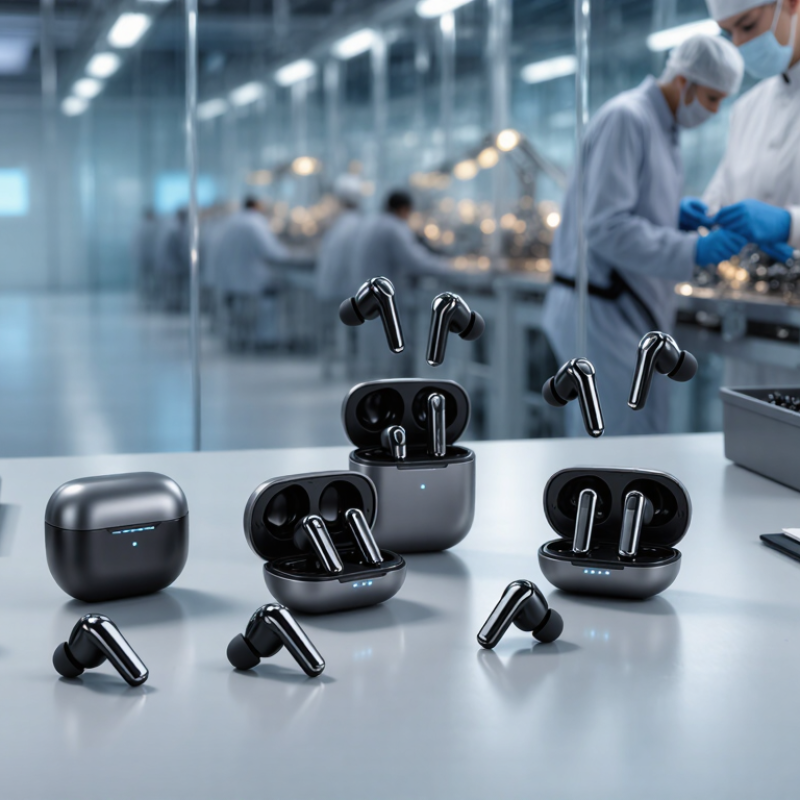
What Does a China True Wireless Earbuds Supplier Do?
A China true wireless earbuds supplier does more than assemble small audio devices. The supplier may help develop the shape, charging case, touch controls, microphone layout, and battery configuration. Some teams also provide sample units before mass production. This step reveals practical problems, such as weak hinges, uncomfortable ear tips, or unstable Bluetooth connections.
The supplier usually manages component sourcing, assembly, firmware coordination, quality inspection, and packaging. Reliable suppliers should explain their testing process clearly. Tests may cover battery capacity, charging cycles, microphone performance, connection distance, button response, and drop resistance. They should also provide accurate technical documents and support required product compliance in the target market. A factory can look impressive during a visit, yet its production records may be incomplete. That is worth questioning.
Tips: Request a detailed sample report, not only a finished sample. Compare several production batches. Ask who controls key components and how defective units are handled. Confirm lead times in writing. Small details matter. Also review communication speed after the quotation. Slow replies during development may become serious delays later. No supplier gets every forecast right. Buyers should leave room for testing, revisions, and occasional mistakes. A strong partnership depends on evidence, honest updates, and consistent follow-through.
Typical reference timeline for the main OEM/ODM stages of true wireless earbuds production
A China true wireless earbuds supplier commonly supports product specification, acoustic and industrial design, prototype development, compliance preparation, mass production, quality control, and export logistics. The timeline shown is an indicative reference in weeks; actual lead times vary according to customization, certification requirements, order quantity, and component availability.
A reliable China true wireless earbuds supplier must prove more than a low quotation. Counterpoint Research reported that the global TWS market grew 18% year over year in the second quarter of 2024. This growth increases pressure on suppliers to deliver quickly and consistently.
Start with factory evidence. Request business licenses, production photos, process records, and a recent third-party audit. ISO 9001 certification is useful, but it is not proof of perfect quality. Inspect battery traceability, soldering stations, acoustic rooms, and final packing lines. Ask for AQL inspection results before shipment. Small details matter, such as left-right volume balance and charging contact stability.
Technical reliability needs measurable tests. Require battery-cycle reports, microphone tests, Bluetooth connection checks, and latency data. The Bluetooth SIG 2024 market update projected more than 1.1 billion annual Bluetooth device shipments by 2028, so wireless performance should be tested under crowded signal conditions. Ask whether the supplier can provide firmware control and documented OTA procedures. This is often overlooked.
Compliance records should match the destination market. Request test reports for battery transport, radio performance, chemical restrictions, and product safety. Reports must show the same model and battery used in mass production. Samples can be excellent while bulk units disappoint. I have seen this gap before. Keep a sealed pre-production sample for comparison, and audit random cartons during production. No supplier is perfect. Transparent correction matters more than polished promises.
Choosing the best China true wireless earbuds supplier requires more than comparing prices. Suppliers differ sharply in design capability, engineering depth, and production control. Some factories mainly follow existing reference samples. Others create original acoustic structures, charging cases, and mobile app functions. Ask how they handle driver tuning, microphone placement, Bluetooth stability, and battery protection. Request detailed drawings and working prototypes before discussing mass production.
Manufacturing standards also vary. A reliable supplier should explain its incoming material checks, assembly controls, and final testing process. Useful evidence includes acoustic test records, charging-cycle results, waterproof testing, and random quality inspections. Visit the factory when possible. Observe whether workers use torque tools, clean workstations, and traceable inspection labels. A polished showroom proves little. Production discipline matters more. No supplier gets every detail right. Even experienced teams may underestimate mold changes or packaging damage. That deserves honest discussion.
Tips: Compare at least three suppliers using the same technical brief. Test samples during calls, music playback, and outdoor use. Check left-right synchronization and microphone clarity. Ask for a sample revision plan. Do not accept vague promises about capacity or delivery. A lower quotation may hide weaker components, limited testing, or expensive later revisions. Keep written records of specifications, tolerances, inspection methods, and warranty responsibilities. Small gaps become costly when thousands of units are involved.
Choosing a China true wireless earbuds supplier requires more than comparing prices. Product quality must be checked through evidence, not promises. Request a production sample, not only a showroom sample. Test battery capacity, charging cycles, Bluetooth stability, microphone clarity, and case durability. A ten-minute listening test is not enough.
Ask for factory records, quality-control procedures, and recent inspection reports. Check the laboratory name, report number, test date, product model, and applicable standards. Verify whether the laboratory has suitable accreditation. Do not accept copied certificates without confirmation. Requirements can differ between sales markets, especially for batteries, radio equipment, chemical substances, and packaging. A compliance document may be valid but still cover the wrong model.
During a factory visit or third-party audit, inspect incoming materials, assembly lines, and final inspection areas. Confirm how defective units are separated and recorded. Review traceability for batteries, charging cases, and electronic components. A supplier should explain corrective actions clearly. Vague answers deserve attention. I have seen attractive samples hide weak hinge parts and inconsistent battery cells. That is a costly mistake. Independent pre-shipment testing adds confidence, but it cannot replace continuous production checks. Keep approved samples, inspection photos, and test records together. No checklist is perfect. Recheck critical points when the design changes.
Comparing suppliers starts with evidence, not polished catalog photos. Ask for product specifications, battery details, Bluetooth version, codec support, and charging-case capacity. Request test reports tied to the exact model you plan to order. A generic certificate is less useful.
Then examine production consistency. A sample may sound clear, while units from a later batch vary in volume or microphone performance. Ask how the factory checks pairing stability, call quality, charging, and left-right audio balance. If possible, test samples across several days and in a noisy street or office. Small details matter.
Compare minimum order quantities, lead times, payment terms, and defect-handling procedures in writing. Ask who pays for replacement parts and how defects are documented. A dependable supplier should answer clearly and give realistic timelines, not promise everything. Check whether packaging and manuals can be customized without changing the tested product. No supplier is perfect; even if past orders arrived on time, keeping a small buffer for delays is sensible.
A supplier may coordinate design, component sourcing, assembly, firmware, inspection, and packaging. It may also provide prototypes to check ear-tip fit, case hinges, and connection stability.
Request model-specific records for battery capacity, charging cycles, microphone performance, and drop resistance. A finished sample alone tells only part of the story.
Some follow existing samples, while others develop acoustic structures, case designs, or app functions. Ask for drawings and working prototypes before production.
Compare samples from different batches for volume, call clarity, and charging behavior. Checks can miss things.
Try calls in a noisy street and play music for several days. Check left-right balance, pairing, microphone clarity, and touch response.
Record specifications, lead times, minimum order quantities, inspection methods, and defect handling. Clear paperwork helps when memories differ later.
Not necessarily. A lower price may mean weaker components, limited testing, or costly revisions; I would still compare the evidence.
Notice how quickly and clearly the team answers during development. Leave a time buffer for delays, even after promising updates.
Choosing the best China True Wireless Earbuds supplier starts with understanding the role a supplier can play, from product design and component sourcing to manufacturing, packaging, and delivery. A reliable partner should communicate clearly, offer consistent production capacity, and provide options that match your intended features, budget, and order volume. Suppliers may differ in their design support, customization capabilities, production processes, and ability to scale, so it is important to compare what each can deliver rather than relying on price alone.
Before making a decision, review product samples, ask how quality is checked throughout production, and request relevant documentation for product safety and market requirements. Compare suppliers using the same criteria, including build quality, communication, lead times, pricing, customization, and after-sales support. Careful checks can help you identify a supplier that fits your needs and supports a dependable, long-term business relationship.